

Key Takeaways
- Cake show judging involves a combination of aesthetics, taste, technical skill, and creativity to evaluate entries comprehensively.
- Judges assess elements like flavor balance, structural precision, design symmetry, and adherence to category themes to determine winners.
- Creativity and originality are vital, with unique techniques like sugar sculpting or hand-painting often making cakes stand out.
- Experienced judges rely on their expertise, industry knowledge, and unified scoring rubrics to ensure fairness and consistency.
- Common judging mistakes include neglecting taste, misinterpreting category guidelines, or favoring complexity over creativity, which can lead to biased outcomes.
- Judges value adherence to category-specific criteria, technical accuracy, and innovative designs in delivering objective and credible evaluations.
I’ve always been amazed by the jaw-dropping creations at cake shows. From towering wedding cakes to intricate sugar sculptures, it’s hard not to wonder how judges even begin to decide which masterpiece deserves the top prize. It’s not just about looking pretty—there’s a whole lot more that goes into the judging process than meets the eye.
Overview Of Cake Shows
Cake shows feature elaborate designs, intricate techniques, and diverse themes. These events attract professional bakers, hobbyists, and industry experts. Participants present cakes in categories like wedding, sculpted, novelty, or themed cakes.
Judging criteria at cake shows often include visual appeal, originality, technical skill, and adherence to the theme. For instance, a wedding cake category might focus on clean finishes and elegant designs, while a novelty cake might prioritize creativity and bold concepts.
These gatherings also offer demonstrations, workshops, and vendor booths, creating a collaborative space for learning and inspiration. Attendees gain insight into trends, techniques, and tools that shape the cake decorating world.
Criteria For Judging Cake Shows

Judging at cake shows combines a detailed evaluation of aesthetics, taste, and creativity. Judges balance artistic elements with technical precision to decide on the best entries.
Taste And Flavor
I always notice how vital the taste is in competition cakes. Judges evaluate the balance of flavors, textures, and freshness. Cakes should offer a harmonious bite, ensuring no single ingredient overpowers the others. For example, a chocolate cake might be judged on its richness without being overly sweet, while a citrus-infused option could be assessed for the blend of tart and sweet elements.
Presentation And Design
The design’s visual appeal sets the tone for the entire cake. Judges often assess details like symmetry, color balance, and overall impact. Cakes should align with the event’s theme while displaying a clean, professional finish. For instance, a wedding cake might stand out for its elegant tiers and precise piping, while a sculpted cake could gain points for intricate, realistic decorations.
Creativity And Originality
Originality distinguishes remarkable cakes. Judges look for innovative concepts or unique interpretations of common themes. Techniques, such as hand-painting or sugar sculpting, can elevate creative designs. For example, a novelty cake shaped like a detailed car or a themed cake incorporating fantasy elements would stand out for their ingenuity.
Role Of Judges In Cake Shows
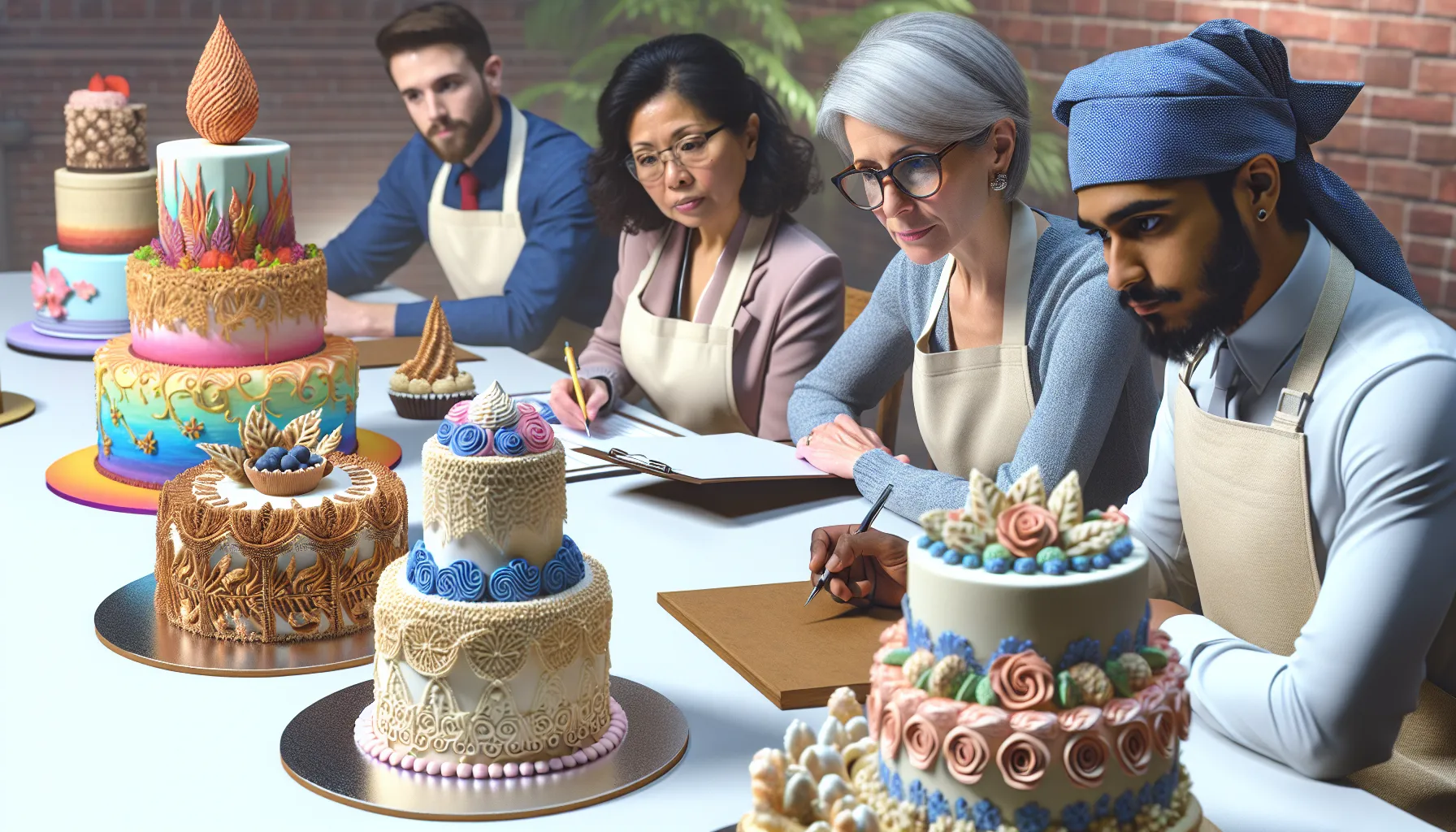
Judges play a key role in cake shows, ensuring that entries meet high standards and fairly identifying the best creations. Their expertise and consistency maintain the credibility of these events.
Qualifications Of Judges
Judges combine extensive experience and industry knowledge to assess entries. Many have backgrounds in pastry arts, cake design, or baking competitions. Certifications from organizations like the International Cake Exploration Societé (ICES) or professional culinary schools often add to their credibility. Competent judges also stay updated on trends, techniques, and tools in cake artistry to evaluate entries effectively.
Evaluating Entry Standards
Judges assess entries against pre-defined standards, focusing on both technical precision and creative execution. Technical parameters include structural integrity, clean edges, precise detailing, and proportional designs. Creative aspects involve originality, theme interpretation, and innovative techniques like airbrushing or gum paste flowers. By adhering to these metrics, judges ensure consistency and fairness across all competition entries.
Common Mistakes In Judging Cakes

Identifying common mistakes in judging cakes ensures fairness and consistency. Oversights can occur if judges neglect balance across key criteria. Focusing solely on aesthetics rather than taste or technical execution creates biased assessments.
Overlooking taste during evaluation leads to skewed results. A visually stunning cake that lacks flavor or has an unbalanced texture diminishes overall quality. Dismissing minor flavor subtleties can make scores feel inconsistent.
Favoring complexity over creativity often misrepresents originality. Elaborate designs might overshadow innovative approaches, but unique concepts deserve equal recognition. Overemphasizing technical intricacy risks overlooking imaginative interpretations.
Misinterpreting category guidelines disrupts fairness. Failing to adhere to specific criteria for themed or novelty cakes can disadvantage entries. Judging unrelated elements, like flavor in visual-only categories, introduces inconsistency.
Uneven scoring among judges affects credibility. Disparities arise if panel members use subjective metrics or overlook standard guidelines. Unified scoring ensures proportional evaluations across all entries.
Insights From Experienced Judges
Experienced judges bring a wealth of knowledge and refined expertise to cake shows. They often start by assessing entries against a checklist of judging criteria, ensuring consistency in evaluation. These criteria typically include technical accuracy, creative interpretation, and taste alignment.
Judges value technical precision as a key assessment factor. I’ve seen them examine sharp edges on fondant, smooth icing applications, and proper structural support. Cakes with gravity-defying designs are analyzed for stability and flawless execution.
Creative elements distinctly capture a judge’s attention. Unique uses of techniques like hand-painting, sugar flowers, and airbrushing highlight the competitor’s artistic vision. Experienced judges appreciate when designers take familiar themes and introduce unexpected, innovative elements.
Taste analysis always remains critical. Judges savor each layer to evaluate flavor profiles, textures, and ingredient harmony. Balanced sweetness, accurate baking, and fresh ingredients allow professionally executed cakes to stand out.
I’ve noticed judges also stress adherence to category guidelines. If a cake is in a sculpted category, for example, it’s judged on its sculpting skill while staying within the prescribed theme. Straying from these rules often results in lower scores, even for visually appealing entries.
Fairness influences every decision a seasoned judge makes. They maintain objectivity by using scoring rubrics and collaborating closely with other jurors to counter personal preferences. This approach ensures every cake is assessed on its merits rather than subjective opinions.
Conclusion
Cake shows are truly a celebration of artistry, skill, and creativity. They bring together passionate bakers and expert judges in a shared appreciation for edible masterpieces. The judging process is a fascinating blend of precision and subjectivity, requiring a deep understanding of both technical execution and artistic vision.
What stands out to me is the dedication and expertise that go into every aspect of these events. From the competitors pushing boundaries to the judges ensuring fairness, it’s clear that cake shows are much more than just competitions—they’re a testament to the incredible talent within the baking community.
Frequently Asked Questions
What is a cake show?
A cake show is an event where professional and amateur bakers showcase their skills by creating elaborate cakes in various categories, such as wedding, novelty, sculpted, or themed cakes. These events often include competitions, demonstrations, workshops, and vendor booths.
What are the judging criteria for cakes in competitions?
Judges evaluate cakes based on visual appeal, originality, technical skill, and adherence to the theme. They also assess flavor, texture, and ingredient balance to ensure the cake delivers both in looks and taste.
What role do judges play in cake shows?
Judges play a crucial role in maintaining standards and ensuring fair evaluations. They use pre-defined criteria to assess technical precision, creative execution, alignment with category guidelines, and overall taste quality.
Why is originality important in cake competitions?
Originality sets a baker’s work apart, showcasing unique concepts and innovative techniques. It reflects creativity and helps judges recognize fresh and imaginative interpretations of common themes.
What are some common mistakes in cake judging?
Common mistakes include overemphasizing aesthetics over taste, favoring complexity over creativity, and misunderstanding category guidelines. Uneven scoring and lack of unified judging criteria can also lead to unfair evaluations.
How do judges evaluate a cake’s visual appeal?
Judges assess factors like color balance, symmetry, overall design impact, and creativity. They also check the structure, clean edges, and alignment with the competition’s theme.
Do judges consider taste when evaluating cakes?
Yes, taste is critical in judging. Judges evaluate the balance of flavors, textures, and freshness, ensuring no ingredient is overpowering and the cake offers a well-rounded flavor profile.
What certifications do cake show judges typically hold?
Judges often have certifications from organizations like the International Cake Exploration Societé (ICES) or professional culinary schools, ensuring they possess the expertise to evaluate cakes effectively.
How do judges maintain fairness in cake competitions?
To maintain fairness, judges use scoring rubrics and collaborate during evaluations. They focus on technical accuracy, creativity, and taste, ensuring consistent and objective assessments across all entries.
What can attendees gain from cake shows?
Attendees can learn about the latest cake decorating trends, tools, and techniques through demonstrations and workshops. These events also provide a platform for networking and inspiration within the baking community.